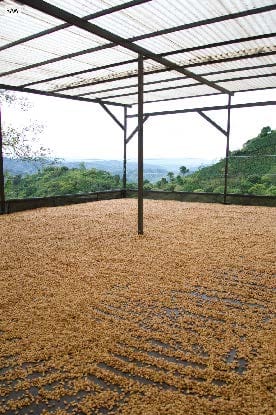
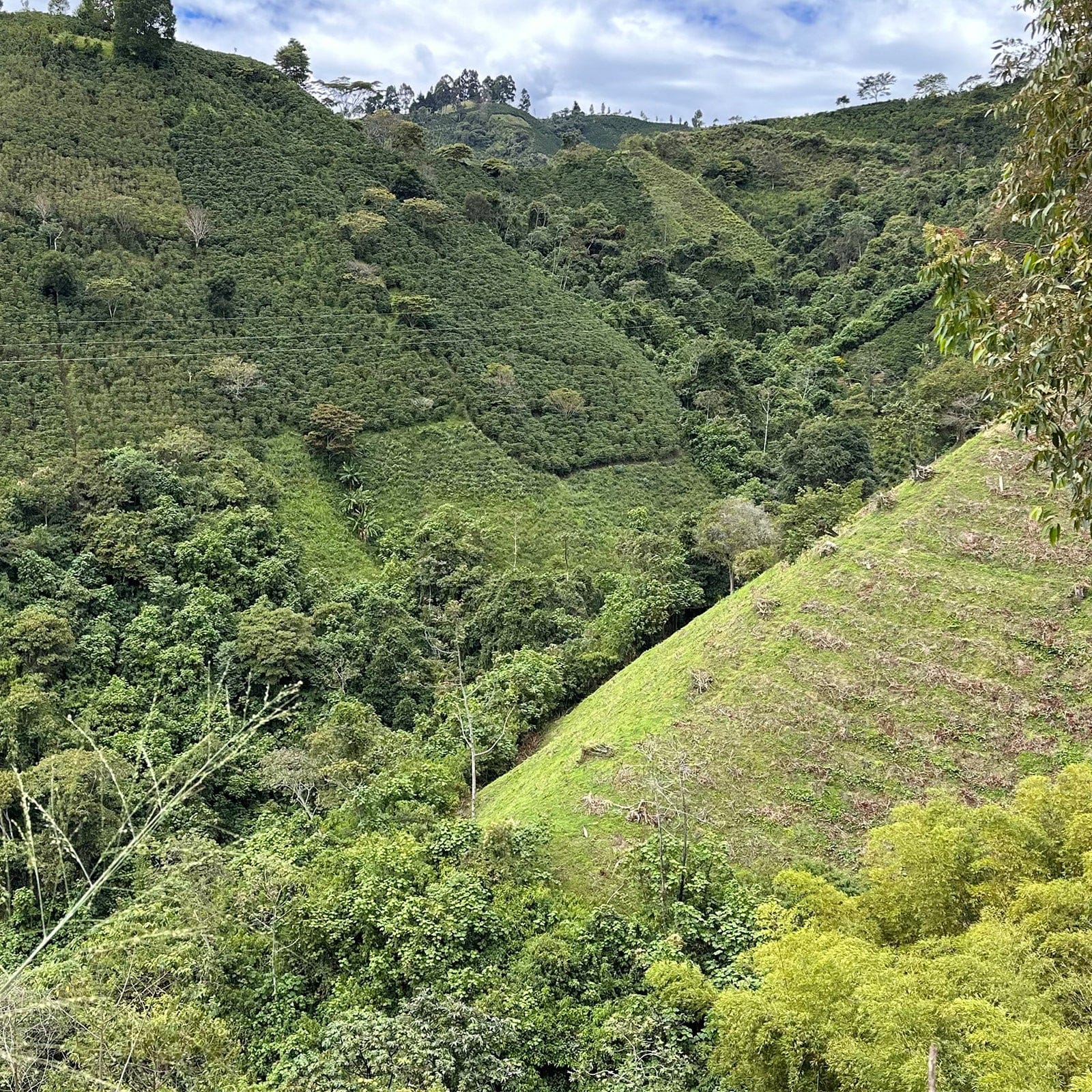
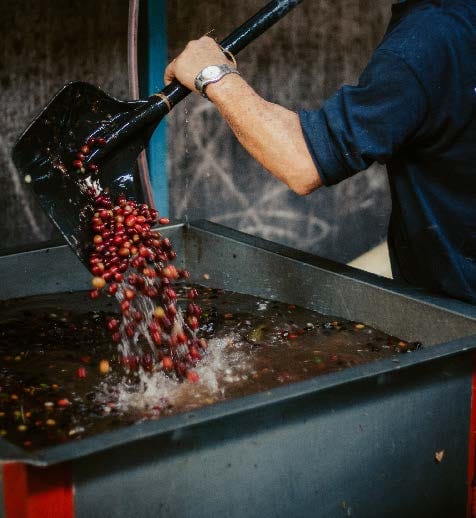
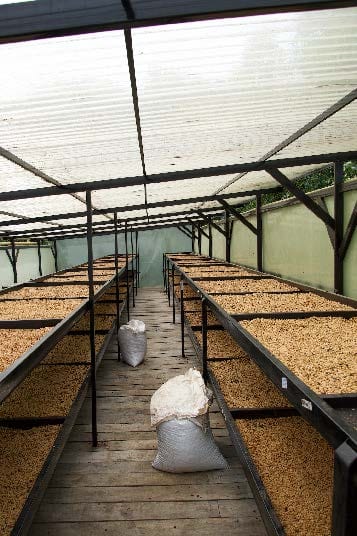
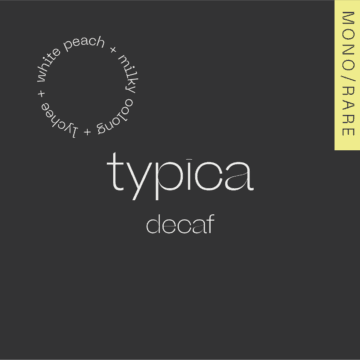
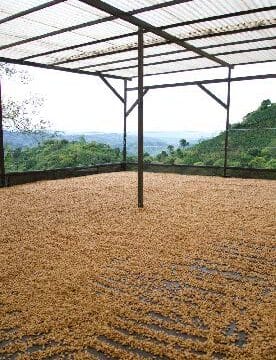
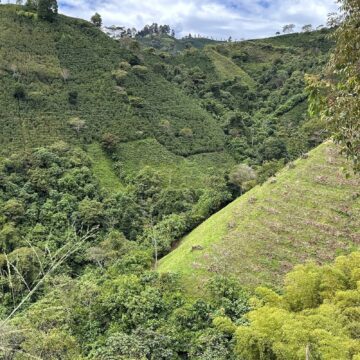
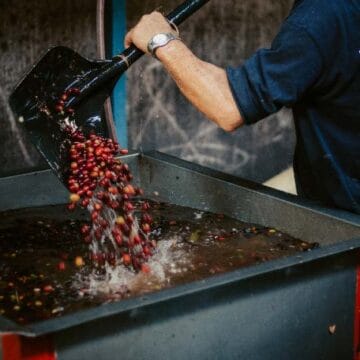
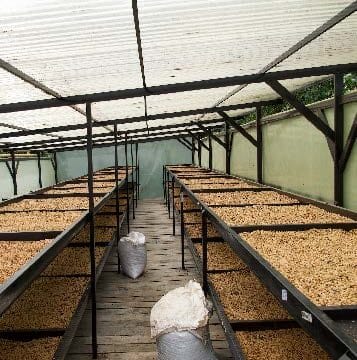
This is a Typica lot from Finca Nogales in Bruselas, Pitalito, Huila, grown at 1900 masl, picked with intention, and processed with the kind of care you normally only see reserved for competition coffees. It starts as a clean washed lot, flotation, a controlled 24 hour fermentation, washing, then slow drying on raised beds before hulling and final selection.
The decaf step is where this coffee earns its place. Instead of stripping the coffee down until it tastes like an absence, the process is built to preserve clarity and texture.
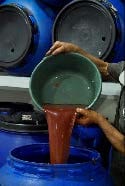
The beans go through repeated hot water immersion to pull caffeine out, then they rest in a natural solvent called “mosto”, derived from coffee pulp or husk, for 24 hours. After a thorough wash, the coffee dries again for around five days, bringing it back into balance without flattening the cup.
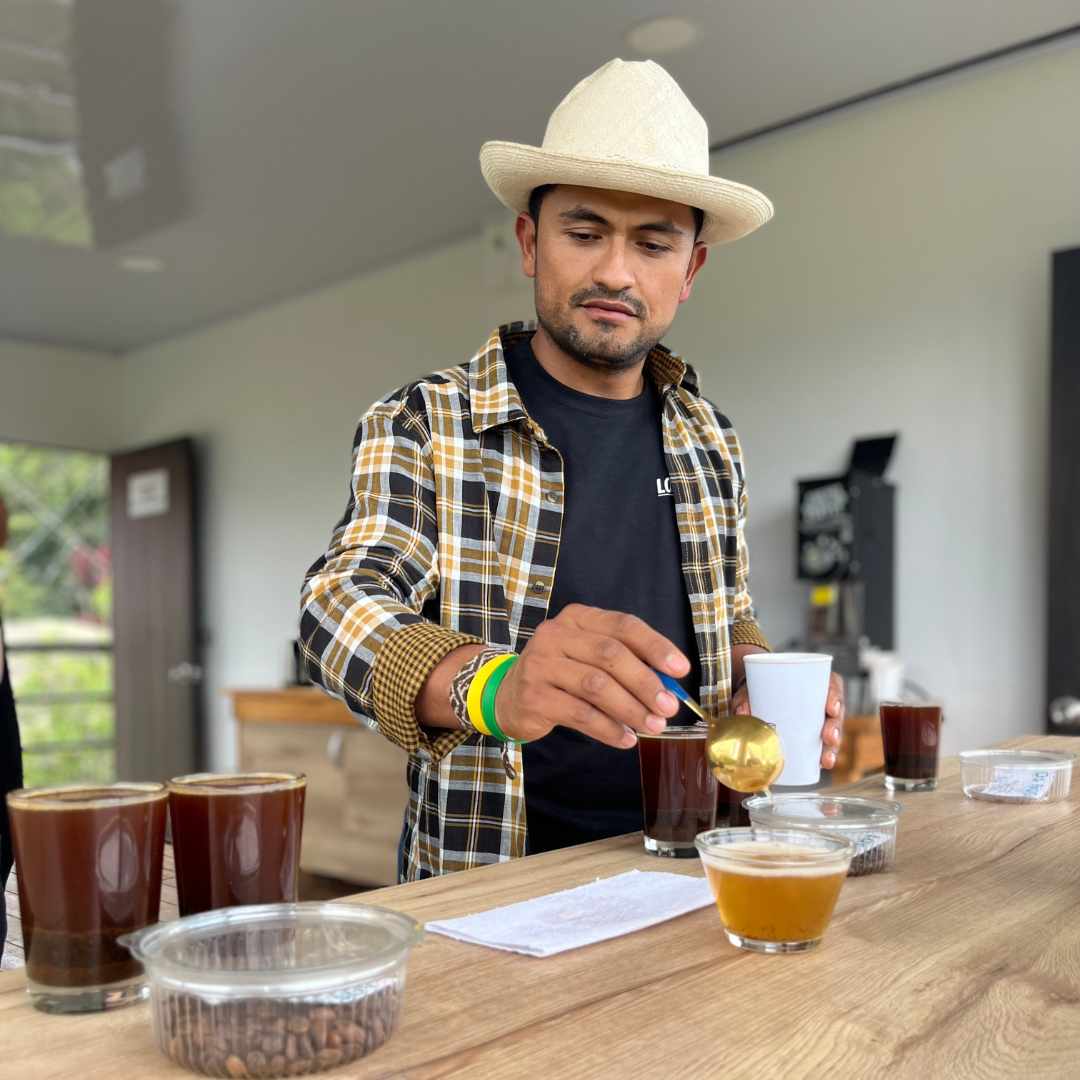
The result is decaf like no other. Silky and round from the first sip, with a refined, milky oolong tea-like structure that keeps unfolding as it cools. Expect white peach sweetness up front, then a milky oolong finish that hangs around in the best way. It’s calm, aromatic, and precise, the kind of decaf you can brew at night and still feel like you’re drinking something rare and uncompromising.
If you’ve been waiting for a decaf that doesn’t ask you to compromise, this is it.
TYPICA DECAF vs CATURRA DECAF
Both coffees are decaffeinated using the same “mosto” method from Nogales, designed to preserve sweetness, clarity, and structure. The difference is the variety and how it translates in the cup.
Typica is lighter and more lifted, white peach, milky oolong tea, with a silky, tea-like finish.
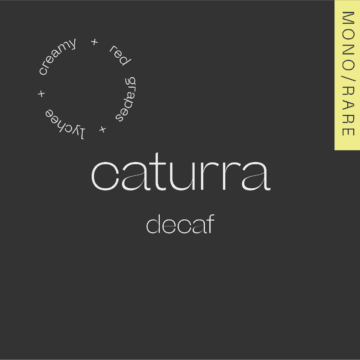
Caturra is slightly deeper and rounder, red grape and lychee, with a creamier, more cushiony mouthfeel.
FORM vs FUNCTION vs LESS WASTE
We love good packaging design, but not waste. That’s why we aim for a balance between aesthetics and sustainability. Finding food-safe solutions that work across local and international recycling systems isn’t easy, but we take it seriously. For us, reuse, reduce, recycle is more than just a label.
When ordering coffee, you can choose from three packaging types:
A.M.O.C. JAR
Made from fully recyclable PET. Lightweight, durable, and made to be reused endlessly.
REFILL
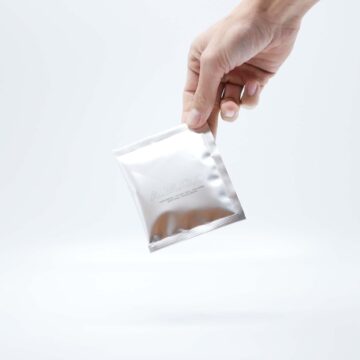
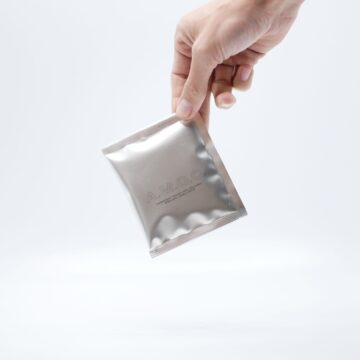
A low-waste option, vacuum-packed in thin, food-grade PP without a valve or zipper. About 40% lighter than standard bags and easier to recycle. These are not retail-friendly and may lose vacuum in transit—this doesn’t affect quality. Transfer to a container after opening. Not freezer-safe unless portioned first.
KILO BAG
For larger orders, we use high-barrier packaging that protects freshness and is recyclable under certain conditions. We chose it for both performance and environmental impact.
You’ll find more on our packaging choices and sustainability approach on the about page.
ESPRESSO VS FILTER ROAST
Our filter roasts are designed for clarity and expression, but they’re great for both filter and espresso brewing. In fact, we often prefer the brighter, more expressive profile they bring to espresso.
Espresso roasts, on the other hand, are specifically developed for espresso brewing only. We don’t recommend using them for filter methods, as they’re tailored for higher extraction and a more classic cup profile.
Choose based on your taste and brew method, but know we stand behind both.
ROAST DATE
All our coffees are shipped as fresh as possible, typically within a few days of roasting. We don’t sit on a lot of stock and roast multiple times a week, so what you receive has been roasted recently, usually no longer than a 7-10 days before shipping, but it could also be roasted and shipped the same day.
You’ll find the exact roast date printed on the label. We recommend resting the coffee for a few days after roasting to allow it to degas and open up in flavour.