TYPICA Colombia – Nogales
€9.9 €85.9Price range: €10.8€9.9 through €93.6€85.9 inc. VATex. VAT
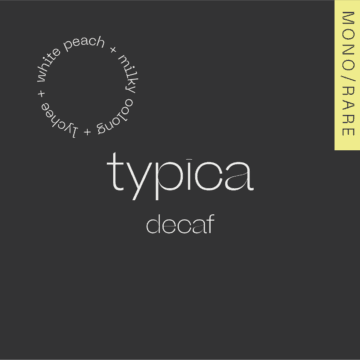
TYPICA — rare
NEW CROP
We are thrilled to introduce this exquisite Typica coffee lot, crafted by an exceptionally innovative and esteemed producer.
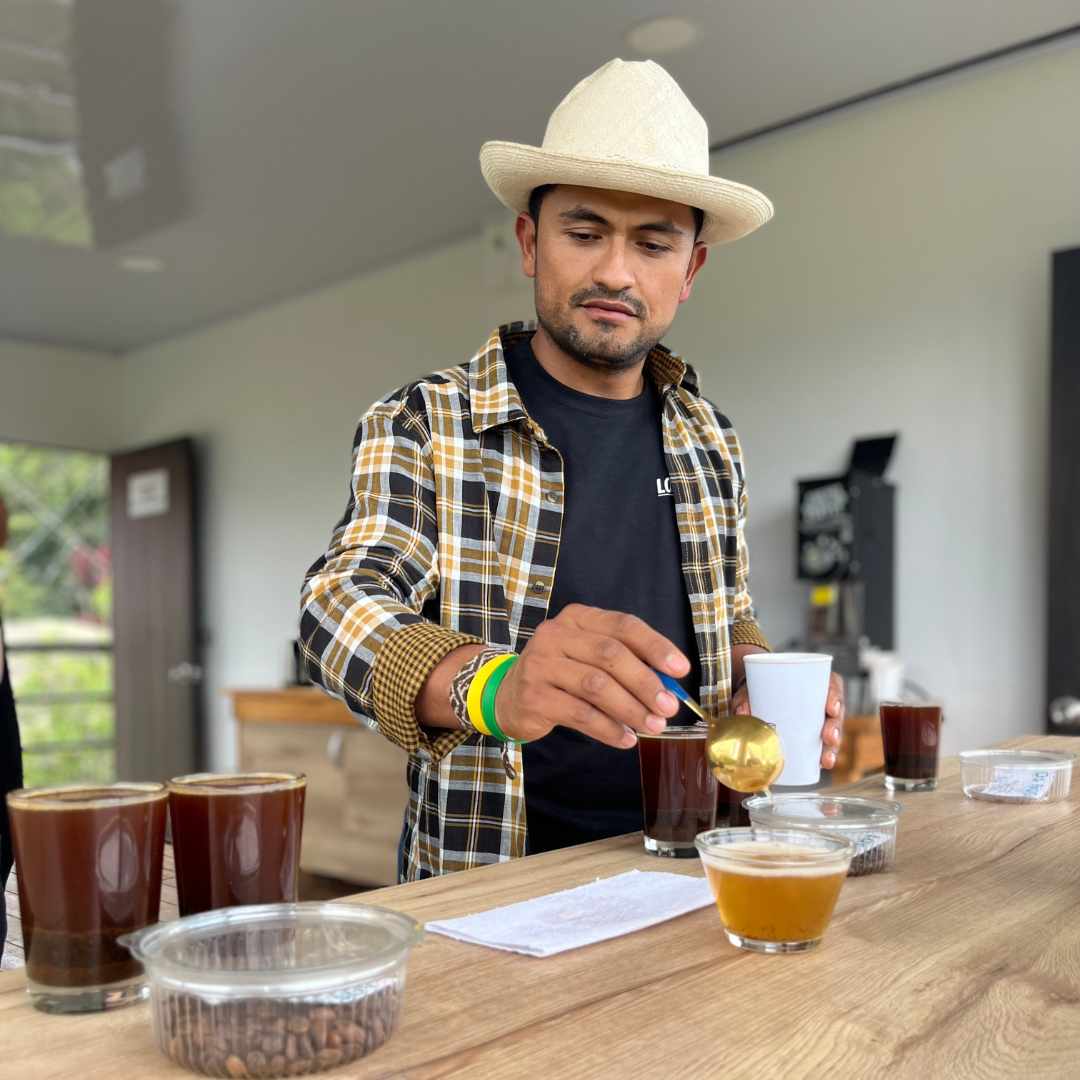
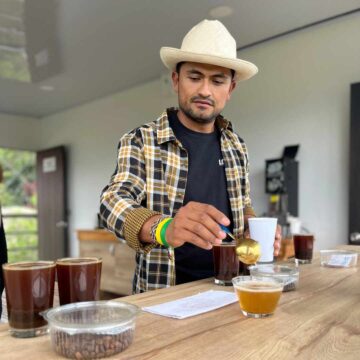
This coffee really caught our attention on the cupping table for being very expressive, but still clean.
Expect tropical fruits, vanilla and a sweet and smooth milkshake experience.
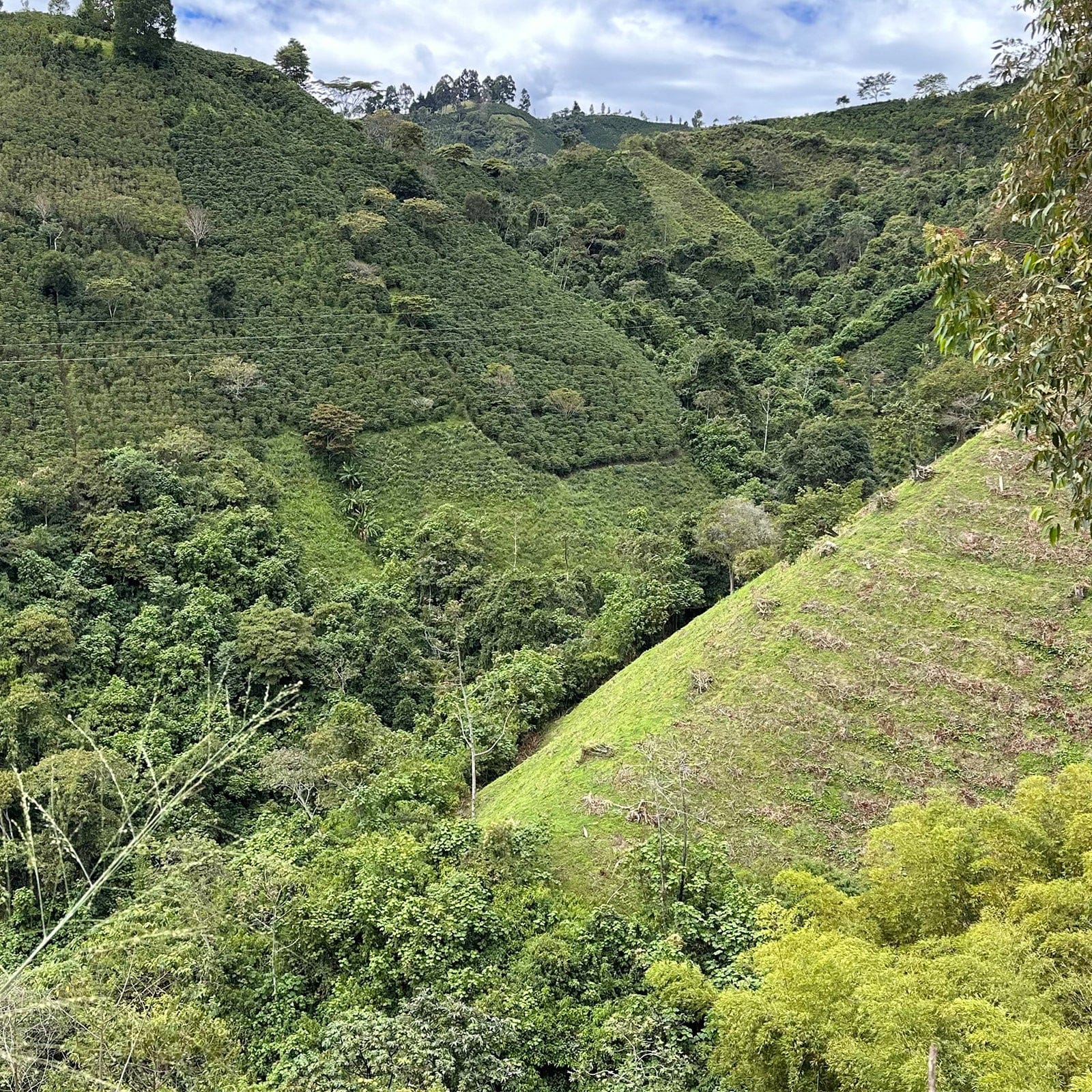
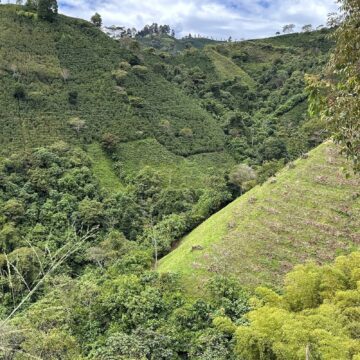
About 80 years ago, Ricardo Hernández and Concepción Castillo settled in Pitalito, Nariño, with a dream to make a name in coffee history. They found their paradise and raised eight children, each devoted to agriculture. Among them, Ricaurte Hernández, born in 1952, shined the brightest, steering the family towards a lasting legacy in the coffee world.
Ricaurte, a true son of the soil, cherished values like generosity and humility. His life revolved around coffee farming, aspiring to pass on these values to his children. He met Suldery Arango, his entrepreneurial partner from Valle del Cauca, with whom he raised a family of eight and built a coffee empire.
In the 1990s, Ricaurte and Suldery ventured into cattle farming in Caquetá, but the business failed, prompting their return to coffee cultivation at Los Nogales. The family’s dedication bore fruit in 2005 when their estate won first place in Colombia’s inaugural “Cup of Excellence” contest, a milestone in coffee history.
Ricaurte was not just a farmer; he was a visionary, constantly seeking innovative practices in coffee cultivation and business. Tragically, his life was cut short in 2013 by violence in the Colombian countryside, leaving a legacy of resilience and inspiration for coffee farmers nationwide.
The family considered selling the farm after Ricaurte’s death, but Oscar Fernando, his youngest son and a former naval officer, chose to honor his father’s legacy by taking over the farm. Oscar, who initially saw farm life as a punishment, grew to appreciate it during his military service. His experience in environmental management and his commitment to sustainable practices and innovation have propelled Los Nogales into a modern coffee production center.
Today, Los Nogales not only produces high-quality coffee but also emphasizes research, technological innovation, and environmental stewardship. The family’s approach to coffee cultivation starts with selecting the best seed stock and using organic fertilizers, aiming to produce a coffee bean of unparalleled quality.
The harvesting process at Los Nogales is meticulous, involving over 30 skilled pickers who ensure only the best cherries are selected. The farm’s innovative processing techniques, including a unique fermentation process and eco-friendly practices, reflect Oscar’s vision of blending tradition with modernity, ensuring the Hernández family continues to make a significant impact in the world of coffee.
PROCESS
The first step in the processing involves a flotation tank to separate the coffee cherries. This tank allows lighter elements like leaves, soil, twigs, and any unripe or damaged cherries to float to the surface of the water, making it easy to remove them. This leaves only the highest quality fruit, which then goes through a secondary, manual selection.
Even though it doesn’t tasty like it, It’s technically a washed coffee because it is pulped before processing, but then the fermentation processed is controlled at microbiological level by Angie (Oscars sister) who studied industrial engineering and applies all her scientifically background to coffee.
ABOUT THE COFFEE
Details |
|
Origin |
Pitalito, Huila, Colombia |
Farmer |
Oscar Hernández – Los Nogales |
Variety |
Typica |
Processing |
Sort-of-anaerobic washed |
Altitude |
1870-2000 MASL |
Profile |
Banana, vanilla milkshake |
You’ll receive an order confirmation right after checkout. Once your item ships, we’ll send you tracking info by email so you can follow the delivery.
We roast and ship multiple times a week, but we don’t promise next-day shipping or unrealistic turnaround times. We do our best to get your order out asap though!
Many of our items are made or selected in small batches. Once they’re gone, they may not restock—if you’ve got your eye on something, don’t wait too long.
All sales are considered final unless the item arrives damaged or incorrect. If something’s off, get in touch and we’ll make it right.
If you have any questions about the product, your order, or how to get the best out of it, our team is always happy to help. Just reach out.